





President's of The Supreme Administrative Court Honorary Award
Judge’s Honorary Chain
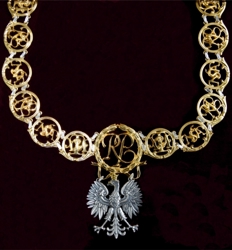 The Judge’s Honorary Chain of the Supreme Administrative Court (Naczelny Sąd Administracyjny – NSA) is a unique decoration symbolising the judicial power, values, tradition and independent status of the administrative judiciary.
The decoration is awarded by the President of the Supreme Administrative Court. It is meant to highlight and honour outstanding achievements in the administration of justice and the faithful, long-term service of its recipients. The Chain expresses the dignity and wise authority of the administrative judiciary, which oversees the legality of decisions made by public authorities and ensures the protection of the public subjective rights of the individual. These powers are particularly important for upholding the principle of a democratic state governed by the rule of law.
In accordance with the provisions of the Order of the President of the Supreme Administrative Court dated 8 March 2016, the decoration of the “Judge’s Honorary Chain of the Supreme Administrative Court” may be awarded for special contributions to the administration of justice. This honour is available to judges of the Supreme Administrative Court who are retiring, as well as to individuals, institutions, social organisations, and associations that have made exceptional contributions to the field of administrative justice.
The Judge’s Honorary Chain of the Supreme Administrative Court is inspired by the original Supreme Administrative Tribunal (Najwyższy Trybunał Administracyjny – NTA) judge’s chain. That exquisite piece, a true gem of artistic craftsmanship, was created by the “Łopieński Brothers” workshop during the interwar period. The workshop is a successor to Jan Łopieński’s “Bronze Factory,” which was established in 1862 in Warsaw.
The contemporary chain consists of 26 circular links made of gold-coloured metal. 25 links have an outer diameter of 35 mm, while one link, situated within the leaf encirclement, is much larger, with an outer diameter of 58 mm, and features the “RP” monogram inside. Attached to this largest link is a pendant designed to resemble a ribbon, showcasing a crowned eagle made of silver-coloured metal, measuring 75 mm in height and 70 mm in width, with the crown highlighted in gold. On either side of the link adorned with the pendant, two links bear the “NTA” monogram, which are mirrored on opposite sections of the chain connected in a circle. Meanwhile, the remaining links alternate between the “NSA” and “RP” monograms. The links are secured together with two parallel clips made of silver-coloured metal. On the back of the link opposite the decorative link, there is the order number of the Decoration.
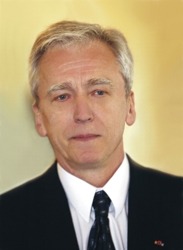 Janusz Stanisław Trzciński (born on 1 July 1942 in Kuńkowce in the Przemyśl province)
An outstanding constitutionalist and administrative lawyer, skillfully blending academic work with legal practice and public service.
He was nominated to serve as a Judge of the Supreme Administrative Court following a decision by the President of the Republic of Poland on 3 December 2001. He held a position within the Commercial Chamber. He served as the President of the Supreme Administrative Court from 2004 to 2010.
Trzciński graduated from the Faculty of Law at the University of Wrocław (1960–1965) and then worked as an assistant at his alma mater in the Department of State Law. He received his doctorate in 1971, his postdoctoral degree in 1978, the title of professor in 1986, and the position of full professor in 1995.
He was involved in the process of systemic reform of the Polish State, participated in the deliberations of the “Round Table”, and was a member of the Sejm during its 10th term (1989–1991) and chairman of the Committee on Legislative Work as well as the Subcommittee on the Political System within the Constitutional Committee of the Sejm.
From 1993 to 2001, Trzciński was the Vice President of the Constitutional Tribunal. The jurisprudential practice and the responsibility associated with overseeing the Tribunal’s operations led to original reflections on the constitutional foundations of the state and the subjective scope of the constitutional appeal.
In 2002–2004, after completing his term of office in the Constitutional Tribunal, the Professor participated in the work of the Convention on the Future of Europe – a body established by the European Council in 2001 with the purpose of drafting a Constitution for the European Community.
He was a member of the team preparing draft laws introducing two-level administrative justice.
During his term of office as President of the Supreme Administrative Court, he held the position of Vice President and President of the Association of the Councils of State and Supreme Administrative Jurisdictions of the European Union.
He serves as the editor-in-chief of the Academic Journals of Administrative Justice.
Trzciński initiated research into the legal function of the Constitution and its role as a legal act in legal transactions, including exhaustively addressing the issue of the direct application of the Constitution by administrative courts. The Professor’s scholarly legacy includes 10 monographs and more than 200 articles on the theory of the state and state bodies, constitutional law and administrative law.
He served two terms of office as dean of the Faculty of Law and Administration at the University of Wrocław (1987–1993).
He was chairman of the Legislative Council to the Prime Minister (2002–2004).
On 19 February 2010, he received an honorary doctorate from Nicolaus Copernicus University in Toruń.
He was awarded Honorary Citizenship by his hometown of Nowa Ruda in Lower Silesia (2009) and the “Distinguished Service to the Opole Region” Badge.
He was also awarded the Knight’s Cross of the Order of Polonia Restituta, the Commander’s Cross with Star of the Order of Polonia Restituta, the Medal “Meritorious for the Judiciary – Bene Merentibus Iustitiae” and the Badge of Honor for Meritorious Service to Legislation.
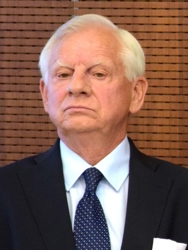 Antoni Włodzimierz Ryms (born on 5 July 1945 in Ciechanów, died on 26 September 2025)
One of the founders of the reform of the administrative judiciary, he has made significant substantive contributions to amending the law, establishing a two-level administrative judiciary and creating new judicial organisational and material structures.
He holds a prominent position in the legal and judicial community due to his extensive legal knowledge, especially in the field of civil and administrative law, and his dedicated service to the social good and the administration of justice of the Republic of Poland. He has a 40-year jurisprudence record, including 32 years of contributions to the development of administrative justice.
In 1968, he graduated from the Faculty of Law and Administration at the University of Warsaw and embarked on a traditional legal career path. This journey began with his judicial apprenticeship in the district of the Olsztyn Provincial Court and proceeded through passing the judicial exam (1970) and working as an assistant judge to serving as a judge in the courts of Warmia and Mazury Region. In 1972, he received an appointment to serve as a judge at the Iława District Court. In 1977, he took a position as a judge in the Płock Provincial Court. In 1981, he was delegated to work in the Legal Department of the Ministry of Justice, and served as the director of the department from 1989.
In 1985, he became a judge of the Supreme Administrative Court. He served as the President of the General Administrative Chamber of the Supreme Administrative Court and Vice President of the Supreme Administrative Court for twenty years (1995–2015).
He served as a member of the State Election Commission from 2003 to 2014.
He was awarded the Silver Cross of Merit and the Knight’s Cross of the Order of Polonia Restituta.
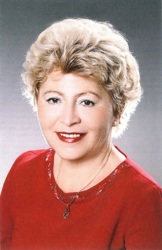 Barbara Adamiak (born on 2 January 1949 in Sanok)
A judge with an exceptional substantive contribution to the body of jurisprudence of administrative courts. She is an eminent law professor with a tremendous and impressive academic record, paving the way for new thinking about administrative procedural law.
She studied law at the University of Wrocław (1967–1971). She received her doctorate in legal sciences in 1977. The core of the scientific interests of prof. Barbara Adamiak became the protection of the individual against the wielding interference of public administration. She obtained a postdoctoral degree in legal sciences in 1987.
The result of the judiciary’s recognition of her exceptional scientific achievements in the field of public administration was her appointment by the President of the Republic of Poland as a judge of the Supreme Administrative Court (1991). In the same year, she took over as head of the Department of Administrative Procedure and Administrative Justice at the Faculty of Law and Administration at the University of Wrocław. In 1992, she was appointed associate professor at the University of Wrocław. From 1993 to 1996, she was Dean of the Faculty of Law and Administration at the University of Wrocław. On 20 November 1997, she was awarded the title of professor.
Adamiak is an experienced educator, extraordinarily committed to educating future generations of lawyers; she is known for being a demanding examiner, reviewer and supervisor.
She has an impressive scientific output (more than 200 publications): monographs, commentaries, textbooks, studies, articles and glosses; she is the co-author of a particularly highly regarded and repeatedly reissued commentary on the Code of Administrative Procedure.
She has repeatedly served as head of research projects on administrative and administrative court proceedings.
She is a long-time member of the program boards of journals: “Zeszyty Naukowe Sądownictwa Administracyjnego”, “Samorząd Terytorialny”, “Acta Universitatis Wratislaviensis. Prawo”.
She was awarded the Silver Cross of Merit and the Officer’s Cross of the Order of Polonia Restituta. She received the latter award on 25 October 2022, during a ceremony at the Royal Castle in Warsaw dedicated to the 100th anniversary of the establishment of the Supreme Administrative Tribunal.
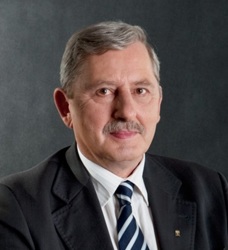 Roman Marek Hauser (born on 8 October 1949 in Poznań)
Author of one of the largest reforms of administrative judiciary in the history of Poland, which made possible the introduction of a two-level model of administrative court proceedings, announced back in the March Constitution. The breakthrough of this achievement contributed to the development of the rule of law and the protection of individual rights in the Third Republic of Poland.
Conforming to family traditions, he pursued his studies at the Faculty of Law of Adam Mickiewicz University (1968-1973) in Poznań. At his alma mater, he defended his doctoral dissertation in 1979, and in 1988 received his doctoral degree on the basis of a dissertation entitled Protection of the Citizen in Enforcement Proceedings, for which he received the Ombudsman’s award in the “State and Law” competition. He was awarded the title of full professor in 2009. He combines high-level scientific and research work with the administration of justice.
Professor Roman Hauser was a researcher at the Department of Administrative and Judicial-Administrative Proceedings of the Faculty of Law and Administration of the Adam Mickiewicz University in Poznań. In his academic activities, he focuses on several research streams: administrative and administrative court proceedings, enforcement proceedings and administrative judiciary. His body of work consists of more than 300 scientific articles. He has promoted new generations of lawyers, including more than a dozen PhDs.
From 1990 to 1992, he served as vice chancellor of the Adam Mickiewicz University in Poznań.
In September 1991, he was appointed to serve as a judge of the Supreme Administrative Court. Initially, he adjudicated in the Poznań Branch. He served three times as President of the Supreme Administrative Court (1992-2004, 2010-2015), Vice President of the Supreme Administrative Court and Director of the Jurisprudence Office of the Supreme Administrative Court. He has an enormous body of jurisprudence.
In 2014-2015, he served as chairman of the National Judicial Council.
He was chairman of the Legislative Council to the Prime Minister.
In 2015, he was elected a judge of the Constitutional Tribunal by the Polish Sejm of the seventh term of office.
He served as a member of the Central Commission for Degrees and Titles for two terms of office.
He was a member of the Committee of Legal Sciences of the Polish Academy of Sciences. He was a member of the Scientific Research Committee and its successor to the Council of Science.
He serves on the editorial committees of leading Polish legal journals: “Państwo i Prawo”, “Ruch Prawniczy, Ekonomiczny i Socjologiczny”, “Monitor Prawniczy”, “Palestra”, “Zeszyty Naukowe Sądownictwa Administracyjnego”, “Casus”.
In 2014, he received an honoris causa doctorate from Maria Curie-Skłodowska University in Lublin.
Awarded the Commander’s Cross with Star of the Order of Polonia Restituta, the Order of Merit of the Italian Republic, the Medal “Meritorious for Justice – Bene Merentibus Iustitiae” and the Ombudsman’s Medal of Honor “For Merit for the Protection of Human Rights.”
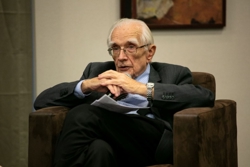 Adam Zieliński (born on 28 June 1931 in Pruszków, died on 14 November 2022 in Warsaw)
One of the most prominent Polish lawyers. He made enormous contributions to the development of a democratic judiciary.
He followed an exemplary judicial educational path: studies at the Faculty of Law and Administration of the University of Warsaw, judicial training in the district of the Provincial Court for the capital city of Warsaw, assistant judge training, then serving as a judge of the Poviat Court and serving as a judge of the Provincial Court. In 1982, he was appointed to serve as a judge of the Supreme Administrative Court. He served as President of the Supreme Administrative Court from 1982 to 1992. The body of jurisprudence of professor Adam Zieliński is highly appreciated and respected. Even then – in the 1980s – the jurisprudence of the Supreme Administrative Court was already shaping its attention to the protection of individual subjective rights. During this very difficult period, judgments were made that are fundamental to the principles of modern judicial review of administration.
He held the office of Ombudsman from 1996 to 2000. As Ombudsman, he signed a United Nations Development Programme agreement and an agreement with the United Nations Development Programme’s Regional Office for Europe and the CIS countries to provide assistance to Central and Eastern European countries in establishing human rights institutions. In 1999, he became vice president of the European Ombudsman Institute.
The scientific career of Professor Adam Zieliński was associated with the Faculty of Law and Administration at the University of Warsaw. In 1968 he earned a doctorate in legal sciences, in 1975 – a PhD degree in legal sciences, and was awarded the title of professor in 1989. He left behind more than 150 scientific publications and generations of educated students and doctoral students. His legacy includes substantive and formal administrative law, constitutional law and protection of civil rights, substantive and procedural civil law, procedural criminal law, labour law and family law.
He was a member of the Committee on Legal Sciences of the Polish Academy of Sciences and a member of the Scientific Council of the Institute of Legal Sciences of the Polish Academy of Sciences, the Scientific Council of the Institute for the Study of Judicial Law and the Scientific Council of the Institute of Civil Law of the University of Warsaw. From 1986 to 1990, he served as President of the General Board of the Union of Polish Lawyers. He was also a member of the Human Rights Committee of the United Nations (1985-1988). From 1996 to 1997, he was a member of the House of Human Rights in Bosnia and Herzegovina.
He served on the editorial committees of State and Law and The International Ombudsman Yearbook.
He was awarded the Gold Cross of Merit, the Knight’s Cross, the Medal “Meritorious for the Judiciary – Bene Merentibus Iustitiae” and twice the Commander’s Cross with Star of the Order of Polonia Restituta for outstanding contributions to the judiciary.
He received his last decoration – the Judge’s Honorary Chain of the Supreme Administrative Court – on 25 October 2022, during the celebration of the 100th anniversary of the establishment of the Supreme Administrative Court at the Royal Castle in Warsaw, three weeks before his death.
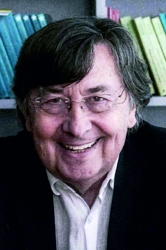 Marek Aureliusz Zirk-Sadowski (born on 6 July 1952 in Łódź)
One of the finest minds of Polish legal science and the Polish judiciary.
A prominent legal theorist and philosopher whose work influences Euro-Atlantic legal culture. An outstanding academic teacher. A professor of unparalleled intellect, imagination and creativity. Inspiring, open, sensitive. An authority in the scientific community, able to combine scientific activity with organisational activity and public service.
It realizes the integrative role of legal studies in relation to the detailed legal sciences and to the humanities and social sciences, emphasising that the necessary link between the reflective perspective and the practice of law is of particular importance for the highest institutions of justice.
Academically affiliated with the University of Łódź. His master and mentor was Professor Jerzy Wróblewski. He graduated from the University of Łódź with a degree in law (1973) and philosophy (1976). In 1977, he received a doctorate in law, and in 1984 – PhD. In 1990, he was awarded the title of associate professor at the University of Łódź, and in 2000 – the title of full professor.
From 1990 to 2019, he headed the Department of Theory and Philosophy of Law. He served two terms of office (1990-1993 and 1999-2002) as Dean of the Faculty of Law and Administration of the University of Łódź. From 1993 -1999 he was pro-rector of the University of Łódź.
The scientific output of Professor Marek Zirk-Sadowski includes more than 200 articles, devoted to the problems of analytical philosophy of law, legal hermeneutics, axiology of law, judicial application of law, the relationship between law and morality, the role of legal positivism in the evolution of legal culture, the participation of lawyers in European integration and legal culture. It comprehensively addresses the philosophical positions of E. Husserl and K. Twardowski, as well as the philosophical and legal positions of H. Kelsen and R. Dworkin. His work also included dogmatic and legal themes related in particular to labour law, tax law, financial law, administrative law, including in particular the analysis of the jurisprudential practice of administrative courts and constitutional law.
By a decision of the President of the Republic of Poland dated 14 June 1994, he was appointed to serve as a judge of the Supreme Administrative Court Branch in Łódź. Following the reform of the administrative judiciary, he ruled at the Provincial Administrative Court in Łódź. However, back in 2004, he was transferred to adjudicate at the Supreme Administrative Court. From 2004 to 2015, he was vice president of the Supreme Administrative Court, heading the Finance Chamber.
By decision of the President of the Republic of Poland dated 15 February 2016, he was appointed President of the Supreme Administrative Court. He served in this capacity until the end of the term of office (17 February 2022). His great merit was to preserve the independent position of the Supreme Administrative Court and at the same time uphold the Court’s interaction with other public authorities, in accordance with the values of the Polish Constitution, during the years of threats to judicial independence that fell to his presidency.
Since 21 February 2022, he served as Director of the Jurisprudence Office of the Supreme Administrative Court. He retired on 6 July 2024.
In the 1990s, he was entrusted with the mission of organising the Polish Section of the International Association for Social and Legal Philosophy (IVR), which he subsequently chaired. He became president of the International Association for Social and Legal Philosophy in 2006-2007, and held the position of vice president of the organistion from 2003-2006 and 2007-2011.
Professor Marek Zirk-Sadowski taught as a visiting professor at American, Italian, Scottish, French and Japanese universities. He participated in international research programs, including “Comparative Legal Precedent Study” – a program of American and European universities, and “Theory of European Law” – research program of the University of Edinburgh.
He is editor-in-chief of the “Archiwum Filozofii Prawa i Filozofii Społecznej”, a journal published by the IVR Polish Section; editor of the “Jurysprudencja” publishing series, and a member of the editorial committees or scientific boards of the following journals: “Państwo i Prawo”, “Studia Prawno-Ekonomiczne”, “Zeszyty Naukowe Sądownictwa Administracyjnego”, “Acta Universitatis Lodziensis. Folia Iuridica”.
Awarded the Officer’s Cross of the Order of Polonia Restituta, the Knight’s Cross of the Order of Polonia Restituta, the Golden Cross of Merit.
He received the Judge’s Honorary Chain of the Supreme Administrative Court on the day of his last judicial session at the Supreme Administrative Court.